About 40 minutes
The Stellar Legion — Edition Insights
Space Future
8,988 recorded words. 1 minutes difference from this book's estimate.
View Gutenberg source #61844
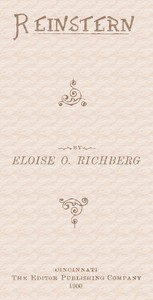
Reinstern — Themes and Context can be approached with a clearer sense of reading commitment from its source measurements: 8,749 words, 39 min estimated reading time, and 3 detected text sections.
The text analysis averages about 22.9 words per sentence, while the detected sections provide another way to judge how the source is divided.
Project Gutenberg metadata also associates the work with “Science fiction,” connecting these edition facts with the source record’s subject description.
Explore this collection
These alternatives are selected using recorded categories and estimated reading time.
About 40 minutes
Space Future
8,988 recorded words. 1 minutes difference from this book's estimate.
View Gutenberg source #61844About 40 minutes
Space Future
9,099 recorded words. 1 minutes difference from this book's estimate.
View Gutenberg source #61952About 38 minutes
Space Future
8,658 recorded words. 1 minutes difference from this book's estimate.
View Gutenberg source #63675Search stored excerpts and compare books → Choose by your preferences →
Choices use stored catalog measurements. Estimates vary with reading speed. A shared category is a catalog label, not a claim that two books have the same argument or literary quality.
Search reads excerpt text stored with this catalog and links to its associated Gutenberg record. The connection is stored in the site database; this tool does not recheck that every excerpt is word-for-word identical to that external record. Excerpt search does not cover every chapter and does not verify historical publication dates.
Catalog snapshot checked: 2026-09-26. Coverage: 90 public books, 90 available source excerpts.
Calculated from edition completeness, EPUB availability, text structure and catalogue metadata. Not a user rating.
Total of 100 points, scaled to a 2.5-5.0 range. Editions with an empty description or a missing EPUB file are not scored.
Public-domain source text
The source text is kept in the dedicated reader, separate from this catalogue record and its commentary.
The story opens with a jarring train journey across barren plains, punctuated by "forlorn specimens of unkempt and altogether hopeless humanity," before a crash deposits the narrator onto a springy platform in an idyllic landscape. The contrast is immediate: the dreary Earth-like setting gives way to a perfumed atmosphere, fertile fields, and cheerful peasants dancing and gathering fruit. Two children approach, offering government-paid guide services, and the narrator is led into a society that appears to have solved many of Earth's problems.
The excerpts reveal a community that takes a deterministic view of human behavior. A guide explains that "children inherit all physical tendencies from their physical parents," and a father's vicious inclinations are traced to his own father, who had controlled his temper to pass "ante-marriage tests." The system holds parents accountable: the father is uniformed in red and sent to a School of Philosophy for a season, subjected to refining music until his reformation is complete. The mother is also considered at fault for shielding her husband, and she temporarily resigns her "maternal rights and colors." This suggests a society where personal failings are managed through public correction and where the welfare of future generations is paramount.
In the fields, mothers nurse their infants while government agents, identifiable by small volumes suspended from their girdles, keep time accounts. These agents, who are not parents, track the time mothers spend with their children, ensuring they are not harassed. The guide explains that time is a factor in determining crop value, and that close companionship with nature allows the community to absorb physical elements that give strength and endurance. The agents' presence underscores a society where even leisure and parenting are monitored, yet the tone is not oppressive; rather, it is presented as a system that enables youthful vigor and freedom from Earth-folk's aging.
A striking detail is the mention of "Elementals"—thought-creatures bred by evil-doers that swarm around unhealthy humanity, endangering sensitive organisms. The guide describes them as ravenous beings that, bereft of filth, lose vitality and disintegrate. This metaphysical element adds a layer to the society's strictness: a father's relapse not only harms his family but attracts these parasites, threatening the entire community. The father's reformation is framed as a victory over these parasites, and he is restored to his paternal colors. The excerpts thus present a world where moral failings have tangible, almost supernatural consequences, justifying the community's interventionist approach.
Readers should note that the excerpts provide only a partial view of this utopia, focusing on its mechanisms of social control rather than its daily pleasures. The narrator's journey from a dreary Earth to this harmonious realm suggests a critique of contemporary society, but the full scope of Richberg's vision—including how the community handles dissent or whether the narrator remains—is not revealed in these passages. Approach the text as a speculative thought experiment about heredity, accountability, and the price of perfection.
I kept thinking about how quiet that world felt, how temper could be gentled by music rather than punished. It reminded me of another edition’s marginalia, tracing similar threads through speculative history. The Stellar Legion — Edition Insights caught my eye, and I found myself lingering there too, in that same soft afterglow.
Capture what you thought, learned, and would like to remember.









