About 41 minutes
The Space Flame — A Closer Reading
Space Future
9,350 recorded words. 1 minutes difference from this book's estimate.
View Gutenberg source #61717
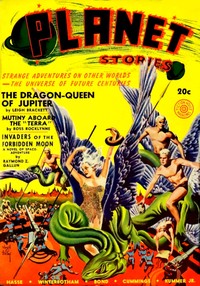
The source record for Genesis! — Key Ideas to Explore measures this digital text at 9,654 words, 42 min estimated reading time, and 1 detected text section.
The text analysis averages about 13.8 words per sentence, while the detected sections provide another way to judge how the source is divided.
Project Gutenberg metadata also associates the work with “Science fiction,” connecting these edition facts with the source record’s subject description.
Explore this collection
These alternatives are selected using recorded categories and estimated reading time.
About 41 minutes
Space Future
9,350 recorded words. 1 minutes difference from this book's estimate.
View Gutenberg source #61717About 43 minutes
Space Future
9,727 recorded words. 1 minutes difference from this book's estimate.
View Gutenberg source #63392About 40 minutes
Space Future
8,988 recorded words. 2 minutes difference from this book's estimate.
View Gutenberg source #61844Search stored excerpts and compare books → Choose by your preferences →
Choices use stored catalog measurements. Estimates vary with reading speed. A shared category is a catalog label, not a claim that two books have the same argument or literary quality.
Search reads excerpt text stored with this catalog and links to its associated Gutenberg record. The connection is stored in the site database; this tool does not recheck that every excerpt is word-for-word identical to that external record. Excerpt search does not cover every chapter and does not verify historical publication dates.
Catalog snapshot checked: 2026-09-26. Coverage: 90 public books, 90 available source excerpts.
Calculated from edition completeness, EPUB availability, text structure and catalogue metadata. Not a user rating.
Total of 100 points, scaled to a 2.5-5.0 range. Editions with an empty description or a missing EPUB file are not scored.
Public-domain source text
The source text is kept in the dedicated reader, separate from this catalogue record and its commentary.
The story opens with a striking hierarchy: Captain Vic Arlen is 'a god in the heavens,' engineer Dave McFerson 'a demi-god,' and scientist Harry Renzu—neither god nor devil—yet the narrative immediately undercuts these labels. The real tension lies in the treatment of Gheal, a 'hideous, half-human slave' from Venus. Winterbotham's diction is blunt and physical: Renzu snarls, 'You dumb, dim-witted chunk of Venusian protoplasm!' as he beats Gheal with a cane. The captain's intervention—'Lay off!'—sets up a moral conflict that drives the plot. The authorial choice to begin in medias res, with the ship already in space and violence occurring, forces readers to infer character and stakes from action and dialogue rather than exposition.
Winterbotham's word choices consistently reinforce power dynamics. Renzu's speech is laced with contempt: 'dumb,' 'dim-witted,' 'miserable wretch.' He commands, 'When I want a thing done, I want it done!' The captain's language is more measured but firm: 'Hold on, Renzu!' and 'My orders are to be obeyed.' The Venusian Gheal is described through dehumanizing physical details—'rubbery, lipless mouth,' 'long, sharp teeth,' 'hairless, leathery body'—that emphasize his otherness. Yet the narrative also grants him a voice: 'a groan of pain and a moaning sob.' This contrast between Renzu's snarling dominance and Gheal's inarticulate suffering creates a visceral sense of cruelty. The author avoids abstract moralizing; instead, the brutality is rendered through concrete, sensory language that makes the reader feel the cane's impact.
Renzu's explanation of his creation process is delivered as a cold, clinical monologue. He describes moulding 'protoplasm over the framework of bones' and using 'an electrical device' to start biological processes. His language is technical: 'chemical exactitude,' 'glands, organs, muscles and nerves.' But the horror emerges in his casual admission of using human bones—Brooks's, then Arlen's—for his creations. Winterbotham lets Renzu reveal his own inhumanity through his matter-of-fact tone: 'I'm going to use Arlen's bones for a creature more human than Gheal.' The author does not editorialize; the reader is left to judge alongside McFerson, who can only stammer, 'You're inhuman, Renzu!' This restraint in narrative commentary heightens the chilling effect of the scientist's words.
The Venusian landscape is described in terms that reflect the story's themes of creation and decay. Arlen observes 'the campfire cast a flickering red glow against the clouds' and 'glows from the craters of Venusian volcanoes.' The planet is neither fully dark nor light—'far from being as light as a moonlit night on the earth.' This liminal setting parallels the moral gray area Renzu occupies. Winterbotham also uses Arlen's scientific speculation to explore the nature of protoplasm: on Venus, inanimate protoplasm exists because there are 'no bacteria, no germs of any sort—no life!' This detail, drawn from the character's reasoning, grounds the fantastical premise in a pseudo-scientific logic. The setting thus becomes more than backdrop; it actively informs the story's central conflict between natural and artificial life.
Winterbotham uses dialogue to reveal character without internal monologue. Renzu's lines are imperatives and declarations: 'They have to be taught everything,' 'I have created life, McFerson.' He never questions his actions. Arlen's speech, by contrast, is reactive and questioning: 'Can't you treat this miserable wretch with decency?' and 'How could Arlen explain Gheal without evolution?' The engineer McFerson speaks little, his horror shown through 'staring eyes; eyes filled with horror.' The most revealing exchange occurs when Renzu boasts of using Brooks's bones for Gheal's skeleton. McFerson's response—'You're less human than Gheal!'—is the story's moral climax, delivered not by the narrator but by a character. This technique keeps the narrative voice neutral while allowing characters to articulate the ethical stakes.
Winterbotham's story is notable for its efficient use of dialogue and description to build a world and a moral dilemma. Readers should attend to the way the author lets characters condemn themselves through their own words, and how the Venusian setting functions as both a scientific puzzle and a stage for human cruelty. The story rewards attention to its carefully chosen verbs and nouns, which carry the weight of its themes without overt commentary.
I remember reading this one on a grey afternoon, the captain’s horror sticking with me long after the silver bones dissolved. It reminded me of the quiet dread in The Ballad of Blaster Bill — Story, Setting & Ideas — how both stories feel less like adventure and more like watching someone mistake ambition for a moral compass. That same unease, settling in like dust.
A brief reflection can help important ideas stay with you longer.









