About 25 minutes
Oridin's Formula — Story, Setting & Ideas
Social Speculation
5,612 recorded words. 4 minutes difference from this book's estimate.
View Gutenberg source #62313
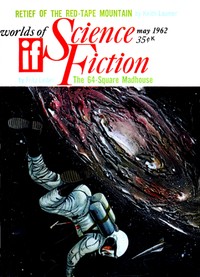
The source record for Misrule — Inside the Classic measures this digital text at 6,476 words, 29 min estimated reading time, and 1 detected text section.
The text analysis averages about 14.1 words per sentence, while the detected sections provide another way to judge how the source is divided.
Project Gutenberg metadata also associates the work with “Science fiction,” connecting these edition facts with the source record’s subject description.
Explore this collection
These alternatives are selected using recorded categories and estimated reading time.
About 25 minutes
Social Speculation
5,612 recorded words. 4 minutes difference from this book's estimate.
View Gutenberg source #62313About 21 minutes
Social Speculation
4,753 recorded words. 8 minutes difference from this book's estimate.
View Gutenberg source #61309About 39 minutes
Social Speculation
8,852 recorded words. 10 minutes difference from this book's estimate.
View Gutenberg source #62324Search stored excerpts and compare books → Choose by your preferences →
Choices use stored catalog measurements. Estimates vary with reading speed. A shared category is a catalog label, not a claim that two books have the same argument or literary quality.
Search reads excerpt text stored with this catalog and links to its associated Gutenberg record. The connection is stored in the site database; this tool does not recheck that every excerpt is word-for-word identical to that external record. Excerpt search does not cover every chapter and does not verify historical publication dates.
Catalog snapshot checked: 2026-09-26. Coverage: 90 public books, 90 available source excerpts.
Calculated from edition completeness, EPUB availability, text structure and catalogue metadata. Not a user rating.
Total of 100 points, scaled to a 2.5-5.0 range. Editions with an empty description or a missing EPUB file are not scored.
Public-domain source text
The source text is kept in the dedicated reader, separate from this catalogue record and its commentary.
The story opens with a brick crashing through Glen Wheatley's office window, a concrete signal that People's Day has begun. Scott immediately establishes a tone of bureaucratic routine under threat: Wheatley has already removed breakables, and his colleague Bert Hillary performs the role of a seasoned veteran while sweating with fear. The map of Government House, possibly planted by the government itself to mislead the mob, becomes a central prop. This is not a riot but a ritual—a scheduled, four-yearly release of violence that the Civil Service must survive by hiding in classified shelters.
Scott builds the world through small, telling details. The mob is described as boiling 'like yeast in a vat,' a simile that dehumanizes them into a natural force. The shelters are graded by class: Class-2 keys for high officials, Class-4 for lower ranks. The map on Wheatley's desk may be a deliberate fake, 'a sop' to give the mob an extra thrill. This suggests a system where even the rules of survival are manipulated. The dialogue between Wheatley and Hillary reveals a hierarchy of experience—Hillary boasts of five or six years in the Civil Service, while Wheatley is on his first Day. Yet both are equally trapped.
When Wheatley flees with Joan, a woman he meets in the corridor, the map becomes a lifeline. She finds a Class-3 shelter, but it is a 'single'—too small for two. She tosses him a Class-2 key and blows a kiss as the door slides shut. The moment is both tender and brutal. Wheatley then encounters a Class-4 shelter that is full, its red light glowing. He pounds on the soundproof panel, but no one answers. The shelters are for 'wise Civil Servants,' not the slow or unlucky. Scott uses these details to underscore the cold logic of the system: survival depends on speed and class rank.
Backed against a window, Wheatley is struck by stones and falls backward through the glass. The narration shifts to an exhilarating sense of flight—'space, of freedom'—before cutting abruptly to an editorial from the Albany Evening Star. The editorial declares People's Day 'most successful,' listing the dead including Wheatley, now reduced to a name under 'Class-6 Secondary School Allocator.' The juxtaposition is jarring: the personal terror of the fall is reframed as a statistic in a system that celebrates order. The story ends not with Wheatley's death but with the bureaucratic language that absorbs it.
Scott maintains a tight third-person perspective focused on Wheatley, but the editorial introduces a cold, official voice. The contrast highlights the story's central irony: the violence is both real and sanctioned. The mob's cry 'Government meat!' reduces people to consumable objects, while the editorial's euphemisms ('among those no longer with us') perform the same function from above. The story never explains why People's Day exists or how it began; it simply presents the mechanism. Readers are left to infer the social critique from the gap between Wheatley's experience and the system's framing of it.
Scott's story rewards attention to its small, precise details: the plastic ash tray sent flying, the map that may be a lie, the single shelter that cannot hold two people. The editorial at the end is not an epilogue but a second lens, forcing readers to see the event through the system's own language. For a first reading, note how Scott withholds explanation and lets the ritual speak for itself. The story is complete in under 6500 words, but its implications about class, violence, and bureaucracy linger.
Reading about the brick through the window reminded me of the first time my father showed me his old civil service handbook—those orderly maps of hidden shelters felt oddly comforting. That same quiet unease returned when I picked up Road Stop — Key Ideas to Explore, where order also wears a thin, brittle smile. Both books linger like a half-remembered dream of corridors.
Save your reaction, strongest insight, and memorable passage.