About 23 minutes
The Flying Tuskers of K'niik-K'naak — Reading Notes
Other Worlds
5,227 recorded words. 2 minutes difference from this book's estimate.
View Gutenberg source #61054
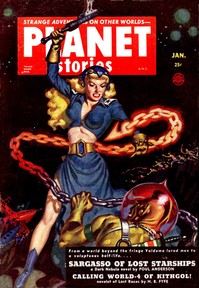
The catalog record for The Dancers — Edition Insights provides practical reading context through 4,628 words, 21 min estimated reading time, and 1 detected text section.
The text analysis averages about 16.0 words per sentence, while the detected sections provide another way to judge how the source is divided.
Project Gutenberg metadata also associates the work with “Science fiction,” connecting these edition facts with the source record’s subject description.
Explore this collection
These alternatives are selected using recorded categories and estimated reading time.
About 23 minutes
Other Worlds
5,227 recorded words. 2 minutes difference from this book's estimate.
View Gutenberg source #61054About 23 minutes
Other Worlds
5,185 recorded words. 2 minutes difference from this book's estimate.
View Gutenberg source #63617About 23 minutes
Other Worlds
5,128 recorded words. 2 minutes difference from this book's estimate.
View Gutenberg source #64031Search stored excerpts and compare books → Choose by your preferences →
Choices use stored catalog measurements. Estimates vary with reading speed. A shared category is a catalog label, not a claim that two books have the same argument or literary quality.
Search reads excerpt text stored with this catalog and links to its associated Gutenberg record. The connection is stored in the site database; this tool does not recheck that every excerpt is word-for-word identical to that external record. Excerpt search does not cover every chapter and does not verify historical publication dates.
Catalog snapshot checked: 2026-09-26. Coverage: 90 public books, 90 available source excerpts.
Calculated from edition completeness, EPUB availability, text structure and catalogue metadata. Not a user rating.
Total of 100 points, scaled to a 2.5-5.0 range. Editions with an empty description or a missing EPUB file are not scored.
Public-domain source text
The source text is kept in the dedicated reader, separate from this catalogue record and its commentary.
The story begins not with arrival but with aftermath: the colonists from the Elpis sit in the dark before dawn, debating the killing of five natives—including a woman and a baby—during their first landing. Rossiter’s guilt and Bernard’s rationalizations set a tone of moral unease that pervades the opening. The planet, a satellite of Proxima, is described as having only one land mass and constant wind, a setting that feels both alien and oppressive. The dialogue reveals that Earth is frozen, its survivors burrowing underground, and that the colonists are exiles carrying the weight of a failed civilization. This is not a story of triumphant exploration but of uneasy settlement, where the past intrudes on every attempt to start anew.
The guilt is not evenly shared. Rossiter’s weariness and shivering hint at a deeper unease, while Bernard’s tone is more analytical, even detached. The other colonists murmur in the background, their voices a low chorus of anxiety. The author uses this dialogue to establish a central tension: the colonists must reconcile their need for a new home with the bloodshed that marked their arrival. The fact that the order to blast came from McNess, a figure not yet characterized, suggests a chain of command that may be questioned later.
Bernard’s memory of a report about an Andean tribe’s children being sent to school hints at the irony of progress: even as Earth died, efforts to eliminate “illiteracy and ignorance” continued. The juxtaposition of this mundane bureaucratic detail with the planet’s frozen end is poignant. The colonists’ conversation is a form of mourning, a way to process loss. The taboo on discussing Earth during the voyage is lifted, but the relief is bitter. The past is not a source of comfort but of regret.
The narrative withholds key information about the planet’s inhabitants and phenomena. The reader knows only that five natives were killed, that the colonists are waiting in the dark, and that the wind is cold. The absence of explanation creates a sense of foreboding. The story’s short length (4,628 words) suggests that the mystery of the dancers may be resolved quickly, but the opening establishes that the colonists’ understanding of their new world is incomplete and colored by guilt.
Readers should pay close attention to the colonists’ internal divisions and the sparse details about the planet’s native life. The title “The Dancers” promises a revelation that may challenge the colonists’ assumptions. The story’s brevity means every line carries weight; the moral questions raised in the opening are likely to resonate throughout. Approach this as a character-driven science fiction tale where the alien encounter is filtered through human fallibility.
I keep thinking about that moment in The Dancers when the colonists see the lights moving on the dark planet—the guilt and wonder tangled up together. Something about the silence there reminds me of the ache in The Mercurian — Text and Context, where the stranger’s loneliness feels just as heavy. Odd how both stories whisper that we never quite own what we find.
Create a short personal record of your experience with this book.









