About 89 minutes
Phantom Out of Time — Edition Insights
Other Worlds
20,434 recorded words. 3 minutes difference from this book's estimate.
View Gutenberg source #62395
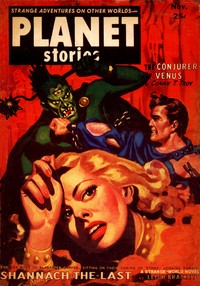
This digital edition of As It Was — Reading Notes is described by source-level measurements including 19,567 words, 1 hr 26 min estimated reading time, and 2 detected text sections.
The text analysis averages about 12.9 words per sentence, while the detected sections provide another way to judge how the source is divided.
Project Gutenberg metadata also associates the work with “Science fiction,” connecting these edition facts with the source record’s subject description.
Explore this collection
These alternatives are selected using recorded categories and estimated reading time.
About 89 minutes
Other Worlds
20,434 recorded words. 3 minutes difference from this book's estimate.
View Gutenberg source #62395About 82 minutes
Other Worlds
18,771 recorded words. 4 minutes difference from this book's estimate.
View Gutenberg source #63759About 79 minutes
Other Worlds
17,982 recorded words. 7 minutes difference from this book's estimate.
View Gutenberg source #63189Search stored excerpts and compare books → Choose by your preferences →
Choices use stored catalog measurements. Estimates vary with reading speed. A shared category is a catalog label, not a claim that two books have the same argument or literary quality.
Search reads excerpt text stored with this catalog and links to its associated Gutenberg record. The connection is stored in the site database; this tool does not recheck that every excerpt is word-for-word identical to that external record. Excerpt search does not cover every chapter and does not verify historical publication dates.
Catalog snapshot checked: 2026-09-26. Coverage: 90 public books, 90 available source excerpts.
Calculated from edition completeness, EPUB availability, text structure and catalogue metadata. Not a user rating.
Total of 100 points, scaled to a 2.5-5.0 range. Editions with an empty description or a missing EPUB file are not scored.
Public-domain source text
The source text is kept in the dedicated reader, separate from this catalogue record and its commentary.
Payne establishes Thisbe II through sensory specifics: a magenta sun named Piramus, orange corona flares, and a lavender sky. The ship Apollo is described as a "flaming sword" with chrome-plated nickel-steel and porcelain glaze, designed to reflect light. This opening is not generic—it ties the setting to the narrative through the ship's visibility and the planet's unusual ionization effects.
The story quickly moves from description to action. Hunters descend via a derrick, and the protagonist Pritchard is introduced as "saturnine" with "amusement lurking in his dark, deep-set eyes." The excerpts show a focus on equipment checks and tactical planning, not on philosophical alien encounter.
The catalog lists "Hunters -- Fiction" and "Human-alien encounters -- Fiction," but the excerpts reveal a more specific dynamic. Pritchard is a big-game hunter, yet his primary goal is not hunting aliens but retrieving a woman named Cornelia Boyce. He says, "We want the wench, boys. We want her on account of last night." The aliens—described as "reptiles and big insects"—are attacking Boyce's "people," and Pritchard intervenes not out of curiosity but to "buy ourselves a stack of chips and sit in on the game."
The hunting framework is a cover for a rescue or capture mission. The text emphasizes tactical language: "planned and directed attack," "defense arc," "war of extermination." The aliens are not passive subjects of a hunt; they are organized combatants. The catalog's "Life on other planets" is present but subordinated to a conflict narrative.
Payne uses dialogue to convey information and character. Pritchard's exchanges with Sturgis and Greene reveal plot points: the nature of the attack, the missing girl, and the plan. For example, Sturgis asks, "Who's fighting whom? Or what's fighting which?" and Pritchard replies, "This is a planned and directed attack." This technique avoids lengthy narration.
The prose is brisk, with short sentences and action verbs: "jets whined on down," "howled through a long pendulum swing." The point of view stays close to Pritchard, filtering events through his observations. The excerpts show no interior monologue; instead, external action and dialogue drive the story.
Thisbe II is not a backdrop but an active element. The sky is lavender, the sun magenta, and the horizon "disturbingly close." The landscape includes "olive-hued hills" and "fists of rock" with "straight planes of cleavage." These details recur: the olive turf, the purple sky, the mirrored mountain flanks.
The setting also affects the plot. The ship's reflective surface makes it a beacon. The "primrose light" of Piramus and the "deep blue shadow" of a mountain spear mark time and space. The battle takes place in "long ribbony grass, now mashed and matted flat." The environment is not merely described; it is integral to the action.
The excerpts offer a narrow window into As It Was, focusing on a single battle sequence. Readers should note that the catalog subjects may mislead: the story is less about hunting or alien encounter than about a tactical intervention in an alien war. The missing context—what happened "last night," who Cornelia Boyce is, and the nature of the "bad dream"—remains outside these passages. Approach the text as a fast-paced action narrative with a strong visual sense.
I keep returning to the strange, lavender quiet of Payne's alien dawn, that precise hush before the chaos. It reminded me, oddly, of the slower dread in Cave-Dwellers of Saturn — Inside the Classic, where the real tension isn’t the hunt, but the uneasy waiting between breaths. A similar feeling of being watched by something that doesn’t quite think as we do.
Use these questions to collect your thoughts before moving on.









