About 86 minutes
As It Was — Reading Notes
Other Worlds
19,567 recorded words. 3 minutes difference from this book's estimate.
View Gutenberg source #63953
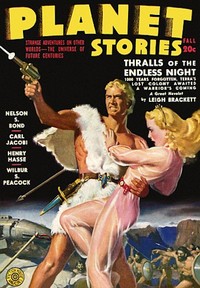
For Phantom Out of Time — Edition Insights, the stored edition analysis reports 20,434 words, 1 hr 29 min estimated reading time, and 2 detected text sections.
The text analysis averages about 11.9 words per sentence, while the detected sections provide another way to judge how the source is divided.
Project Gutenberg metadata also associates the work with “Science fiction,” connecting these edition facts with the source record’s subject description.
Explore this collection
These alternatives are selected using recorded categories and estimated reading time.
About 86 minutes
Other Worlds
19,567 recorded words. 3 minutes difference from this book's estimate.
View Gutenberg source #63953About 95 minutes
Other Worlds
21,669 recorded words. 6 minutes difference from this book's estimate.
View Gutenberg source #63097About 82 minutes
Other Worlds
18,771 recorded words. 7 minutes difference from this book's estimate.
View Gutenberg source #63759Search stored excerpts and compare books → Choose by your preferences →
Choices use stored catalog measurements. Estimates vary with reading speed. A shared category is a catalog label, not a claim that two books have the same argument or literary quality.
Search reads excerpt text stored with this catalog and links to its associated Gutenberg record. The connection is stored in the site database; this tool does not recheck that every excerpt is word-for-word identical to that external record. Excerpt search does not cover every chapter and does not verify historical publication dates.
Catalog snapshot checked: 2026-09-26. Coverage: 90 public books, 90 available source excerpts.
Calculated from edition completeness, EPUB availability, text structure and catalogue metadata. Not a user rating.
Total of 100 points, scaled to a 2.5-5.0 range. Editions with an empty description or a missing EPUB file are not scored.
Public-domain source text
The source text is kept in the dedicated reader, separate from this catalogue record and its commentary.
The opening scene of Phantom Out of Time establishes a familiar rebellion dynamic: four prisoners facing execution, with Dirk Morris insisting he alone should die. But the whispered secret he passes to Neil Hardesty—never revealed in the excerpts—hints at the teleportation ability that will define his later exploits. The prose shifts quickly from this grim cell to a lighter, almost comedic moment where Morris is caught kissing Princess Lenore in a mirror, observed by Rima, the woman he truly cares for. This tonal whiplash between sacrificial heroism and romantic embarrassment is a recurring pattern.
The first excerpt opens with a classic sacrifice scene: Dirk Morris refuses to let his comrades share his fate, reciting a roll call of fallen rebels—Edwards, Johnson, Vallery—to justify his choice. The language is formal and declamatory: “We set ourselves a righteous task: to rid the System of a madman and a tyrant.” Yet the moment is undercut by Fred Meacher’s opportunistic offer to “bear the Message” if Neil declines, and by the whispered sentence that makes Hardesty gasp. The excerpts never disclose what Morris says, leaving the reader to infer it involves the teleportation power that later earns him the nickname “Galactic Ghost.” This withheld information creates a deliberate gap between the reader’s knowledge and the characters’. The cell scene also introduces Graed Garroway, described with “innate ruthlessness and cruelty” hidden beneath “ornate finery,” a contrast that recurs throughout.
The second excerpt pivots to a very different register: a technical discussion of quartz mirrors and harmonic vibrations, followed by a romantic comedy of errors. Morris, having impulsively kissed Princess Lenore, is caught by Rima, who watched via a visor. His embarrassment is palpable: “You must believe me … it was nothing.” The dialogue is stiff but effective, with Rima’s teasing “You do let business interfere with pleasure” contrasting with Morris’s miserable protestations. The mirror itself is a plot device—a “rock-quartz mirror” that traps “harmonic vibrations”—but also a symbol of the story’s central tension: Morris’s public image as a revolutionary versus his private desires. The scene ends with Morris swearing he will never see Lenore again, only for the narrator to immediately contradict him: “In that one statement, Morris was mistaken.” This narrative intrusion underscores the author’s control over fate.
The final excerpt summarizes Morris’s guerrilla activities in a brisk, almost reportorial style. The narrator lists minor thefts—gold, a unicar, a secret formula—alongside a major demolition at “Chuen-tzwan.” The tone is matter-of-fact, with phrases like “some of these blows were of a minor nature” and “other occurrences were more violent.” This catalog of victories serves to establish Morris’s effectiveness while maintaining the pulp serial’s pace. Notably, the excerpt does not describe any of these actions in detail; instead, it emphasizes the public’s reaction: the “whispering citizenry” and the “ruthlessly controlled press.” The contrast between the intimate prison scene and this broad-stroke summary of a two-week campaign highlights the story’s oscillation between personal drama and large-scale conflict. The mention of the “gallant little guerrilla army” on planetoid Iris suggests a wider rebellion beyond Morris’s group.
The excerpts present a story that balances revolutionary rhetoric with romantic farce, often within the same chapter. Readers should note how the author uses the mirror—both as a scientific gadget and a source of embarrassment—to link the two tones. The whispered secret from the opening is never explained in the provided text, so pay attention to how (or if) it is later revealed. The narrative voice shifts between earnest declamation and wry commentary, a flexibility that keeps the pulp conventions from becoming monotonous.
The rain drummed on the windowsill as I finished the last serial pages, Dirk’s awkward kiss still echoing in my mind. That odd blend of public valor and private shame stayed with me. Later, idly browsing, I found a quieter story that explores a similar ache—the gap between the roles we play and the truths we hide. It felt like a natural turn: Quest's End — Edition Insights. The afternoon slipped by, no urgency, just that same reflective hum.
Answer a few questions and save a private reflection on this device.









