About 89 minutes
City of the Living Flame — A Closer Reading
Space Future
20,372 recorded words. 9 minutes difference from this book's estimate.
View Gutenberg source #62218
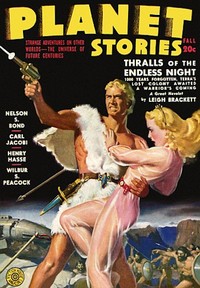
The catalog record for Prey of the Space Falcon — Story, Setting & Ideas provides practical reading context through 22,446 words, 1 hr 38 min estimated reading time, and 3 detected text sections.
The text analysis averages about 14.8 words per sentence, while the detected sections provide another way to judge how the source is divided.
Project Gutenberg metadata also associates the work with “Science fiction,” connecting these edition facts with the source record’s subject description.
Explore this collection
These alternatives are selected using recorded categories and estimated reading time.
About 89 minutes
Space Future
20,372 recorded words. 9 minutes difference from this book's estimate.
View Gutenberg source #62218About 110 minutes
Space Future
25,261 recorded words. 12 minutes difference from this book's estimate.
View Gutenberg source #63932About 110 minutes
Space Future
25,163 recorded words. 12 minutes difference from this book's estimate.
View Gutenberg source #63956Search stored excerpts and compare books → Choose by your preferences →
Choices use stored catalog measurements. Estimates vary with reading speed. A shared category is a catalog label, not a claim that two books have the same argument or literary quality.
Search reads excerpt text stored with this catalog and links to its associated Gutenberg record. The connection is stored in the site database; this tool does not recheck that every excerpt is word-for-word identical to that external record. Excerpt search does not cover every chapter and does not verify historical publication dates.
Catalog snapshot checked: 2026-09-26. Coverage: 90 public books, 90 available source excerpts.
Calculated from edition completeness, EPUB availability, text structure and catalogue metadata. Not a user rating.
Total of 100 points, scaled to a 2.5-5.0 range. Editions with an empty description or a missing EPUB file are not scored.
Public-domain source text
The source text is kept in the dedicated reader, separate from this catalogue record and its commentary.
The novel opens in a Martian gailang night club, where protagonist Curt Varga idly marks gold paper with a radi-stylus while Venusians stand knee-deep in water tanks, their skins “wet and slimy” from glandular fluids. This early scene establishes a pattern: Peacock grounds interstellar conflict in sensory, often visceral detail. The dialogue is transmitted through a “bean-sized amplifier” embedded in living bone, a device that allows silent conversation between Curt and his brother Val. The authorial choice to render telepathy as a physical implant—rather than a mystical power—reflects the story’s broader tendency to technologize intimacy and espionage.
Peacock’s prose borrows the clipped rhythms of mid-century crime fiction. Curt Varga “grinned, and suddenly all of the deadly grimness was gone from his tanned face,” a sentence that could belong to a Raymond Chandler detective. The narrator uses verbs like “swore lightly” and “flicked” to convey efficiency under pressure. Even emotional beats are rendered in physical shorthand: “His hands grew white on the control board from the stress of his emotions.” This hardboiled register extends to dialogue, where characters trade lines like “Careers aren’t important, anyway.” The effect is a protagonist who thinks and speaks in action-oriented fragments, rarely pausing for introspection.
Peacock builds alien environments through tactile and auditory cues. The Venusians’ “nictilian lids” and “reptilian skins” are described with clinical precision, while the music in the night club is a “lilting swirl.” Later, the space chase relies on “the shrill whine of the ray-machine building icy fingers in his brain.” Sound becomes a physical force: the rocket drums produce “muted vibration,” and the stasis-field creates a “slightest sensation of travelling at an incredible rate.” These details do not merely decorate; they anchor the reader in a body experiencing zero-G, gravity tides, and the “cold brightness” of stars.
The “Sargasso of Space” is a region where gravitic tides trap ships, dragging them into a whirlpool of debris and “the bloated, ruptured body of a space-ship.” Peacock devotes several paragraphs to the physics of escape: Curt must “play the power of the ship against the tides, as a master machinist judges the power of his tools.” The passage is notable for its technical specificity—tractor rays, scanner beams, and “the shimmering thread of the tractor’s light”—but also for its symbolic weight. The Sargasso literalizes the story’s central tension between freedom and entrapment, a theme echoed in the Administrators’ monopoly on food and the Falcon’s outlaw base.
The narrator occasionally addresses the reader with knowing asides: “There was no record of anybody ever escaping the tides.” This omniscient tone, combined with the brisk pacing, suggests a pulp audience accustomed to serialized adventure. Peacock also uses free indirect discourse to merge Curt’s thoughts with the narration: “He swore lightly, built up power in the vision-port, sent a scanner beam whirling.” The effect is a seamless blend of action and perception. The story’s voice—hardboiled but not cynical, technical but not dry—positions the reader as a confidant of the hero’s calculations and fears.
Readers should attend to how Peacock uses physical objects—amplifiers, stasis-fields, tractor rays—to externalize internal conflict. The telepathic bone-implant, for instance, turns brotherly loyalty into a piece of hardware. The novel’s pleasures lie less in plot mechanics than in the friction between its hardboiled diction and its pulpy premise. Approach it as a document of 1940s genre craft, where every switch flick and muttered oath carries the weight of a character’s world.
The rain kept tapping the window as I reread the Martian nightclubs, those telepathic amplifiers humming beneath the pulp. That mix of hardboiled grit and lyricism stayed with me, a particular flavor of loneliness under neon. Later, almost by accident, I opened Mutiny — Reading Notes, and found the same quiet ache between the lines, different stars, same shadow.
Your answers remain private and are stored only in this browser.









