About 19 minutes
This Way to the Egress — Text and Context
Machines Invention
4,255 recorded words. 1 minutes difference from this book's estimate.
View Gutenberg source #61332
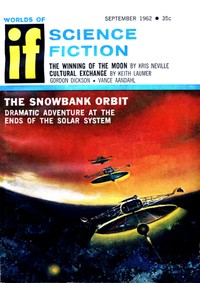
For 1,492,633 Marlon Brandos — A Closer Reading, the stored edition analysis reports 4,579 words, 20 min estimated reading time, and 1 detected text section.
The text analysis averages about 18.9 words per sentence, while the detected sections provide another way to judge how the source is divided.
Project Gutenberg metadata also associates the work with “Science fiction,” connecting these edition facts with the source record’s subject description.
Explore this collection
These alternatives are selected using recorded categories and estimated reading time.
About 19 minutes
Machines Invention
4,255 recorded words. 1 minutes difference from this book's estimate.
View Gutenberg source #61332About 17 minutes
Machines Invention
3,818 recorded words. 3 minutes difference from this book's estimate.
View Gutenberg source #61374About 28 minutes
Machines Invention
6,234 recorded words. 8 minutes difference from this book's estimate.
View Gutenberg source #63676Search stored excerpts and compare books → Choose by your preferences →
Choices use stored catalog measurements. Estimates vary with reading speed. A shared category is a catalog label, not a claim that two books have the same argument or literary quality.
Search reads excerpt text stored with this catalog and links to its associated Gutenberg record. The connection is stored in the site database; this tool does not recheck that every excerpt is word-for-word identical to that external record. Excerpt search does not cover every chapter and does not verify historical publication dates.
Catalog snapshot checked: 2026-09-26. Coverage: 90 public books, 90 available source excerpts.
Calculated from edition completeness, EPUB availability, text structure and catalogue metadata. Not a user rating.
Total of 100 points, scaled to a 2.5-5.0 range. Editions with an empty description or a missing EPUB file are not scored.
Public-domain source text
The source text is kept in the dedicated reader, separate from this catalogue record and its commentary.
The story opens with a pattern: each male character is introduced with a formulaic tag—"Good old Chet, best man in Accounting"—followed by a physical description and a sudden, violent break from domestic routine. Chester McRae screams about being strangled, vomits, and dresses at 3 a.m., his wife's questions met with "lizard-cold Marlon Brando eyes." The repetition of this scene with Bartholomew Oliver and Oswald Williams, each using a different Brando attribute (teeth, hands), establishes a structural rhythm that mimics contagion.
The story's opening pages rely on a rigid template: a character's name, a folksy epithet, a height and distinguishing feature, then a 3 a.m. departure. Chester McRae is "full of vim and vigor"; Bartholomew Oliver is "good man with small-town girls"; Oswald Williams wrote a paper on logical positivism. Each scene ends with the wife's futile questioning and a Brando-inflected gesture—"ice-white Marlon Brando teeth," "snake-swift Marlon Brando hands." This mechanical repetition creates a sense of inevitability, as if the transformation is a script being followed. The reader is not shown a gradual change but a series of identical eruptions, suggesting that individuality is being overwritten by a single, mass-produced persona.
The wives' dialogue is uniformly incredulous and domestic: "Why, Chester! What's the matter with you?" and "Go to sleep." Their language is flat, concerned with routine—work, colds, drunkenness. In contrast, the men's speech shifts abruptly from mumbled deflections to theatrical Brando-esque lines: "See you around, baby," hissed; "I don't give a damn." The narrator's own voice oscillates between the breezy, almost advertising tone of the introductions ("Good old Chet") and the visceral imagery of the transformations ("face dripping with sweat and his hands trembling like a frightened child's"). This clash in register underscores the rupture between the mundane setting and the absurd event.
The story accelerates by stacking identical scenes. The first departure (Chester) is described in detail; the second (Bartholomew) is shorter; the third (Oswald) is even more compressed. The reader is trained to expect the pattern, so each new iteration feels both familiar and increasingly absurd. The pacing mimics a chain reaction: the more men transform, the less explanation is needed. The excerpts break off before the story's midpoint, but the structure suggests that the narrative will continue to escalate through repetition rather than plot complication. The word count (4,579 words) and the opening's rapid-fire introductions indicate a story that builds momentum through accumulation, not traditional rising action.
Readers should attend to how the story uses its repetitive structure to create a sense of unstoppable spread. The Brando persona is not described in depth; it is evoked through a few physical tics and vocal mannerisms, leaving the reader to fill in the cultural archetype. The wives' reactions, though similar, may shift as the story progresses—watch for changes in their language or agency. The title's precise number hints at a counting logic that may become central.
Reading the Marlon Brando story, I kept thinking about how identity dissolves not with a bang but through repetition, and that odd ache carried me somewhere quieter, into the fragmented world of The Rhizoid Kill — Reading Notes. It’s a different kind of unraveling, but the same sense of watching someone slip away from themselves, gently, without farewell.
Answer a few questions and save a private reflection on this device.