About 120 minutes
The Man the Tech-Men Made — Edition Insights
Machines Invention
27,549 recorded words. 18 minutes difference from this book's estimate.
View Gutenberg source #63942
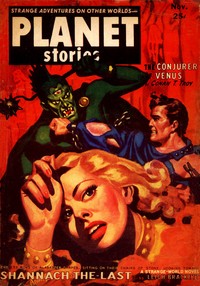
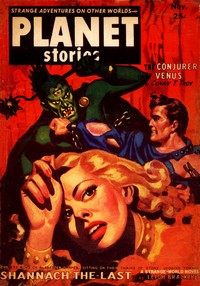
The source record for Shannach—The Last — Reading Notes measures this digital text at 23,308 words, 1 hr 42 min estimated reading time, and 3 detected text sections.
The text analysis averages about 13.5 words per sentence, while the detected sections provide another way to judge how the source is divided.
Project Gutenberg metadata also associates the work with “Science fiction,” connecting these edition facts with the source record’s subject description.
Explore this collection
These alternatives are selected using recorded categories and estimated reading time.
About 120 minutes
Machines Invention
27,549 recorded words. 18 minutes difference from this book's estimate.
View Gutenberg source #63942About 82 minutes
Machines Invention
18,767 recorded words. 20 minutes difference from this book's estimate.
View Gutenberg source #63518About 63 minutes
Machines Invention
14,341 recorded words. 39 minutes difference from this book's estimate.
View Gutenberg source #62040Search stored excerpts and compare books → Choose by your preferences →
Choices use stored catalog measurements. Estimates vary with reading speed. A shared category is a catalog label, not a claim that two books have the same argument or literary quality.
Search reads excerpt text stored with this catalog and links to its associated Gutenberg record. The connection is stored in the site database; this tool does not recheck that every excerpt is word-for-word identical to that external record. Excerpt search does not cover every chapter and does not verify historical publication dates.
Catalog snapshot checked: 2026-09-26. Coverage: 90 public books, 90 available source excerpts.
Calculated from edition completeness, EPUB availability, text structure and catalogue metadata. Not a user rating.
Total of 100 points, scaled to a 2.5-5.0 range. Editions with an empty description or a missing EPUB file are not scored.
Public-domain source text
The source text is kept in the dedicated reader, separate from this catalogue record and its commentary.
Leigh Brackett's Shannach—The Last opens with a man alone in the dark. Trevor, a prospector, has been wandering lost in the caves under Mercury, his torch dead, his boots shed, reduced to bare feet on rough rock. The story wastes no time establishing a hostile environment: the heat is 'terrible,' the silence broken only by 'the slow plodding of Trevor's heavy boots' and later the pulse of his own blood. Brackett uses the physical details of the setting—the 'labyrinth' of tunnels, the 'stifling dark,' the 'jagged peaks' that stand into airless space—to create a sense of immediate, inescapable pressure. The narrative voice is lean and direct, matching the protagonist's grim determination.
The story's structure alternates between two kinds of spaces: the cramped, lightless tunnels and the open but equally deadly valleys. Trevor's initial journey through the caves is described in terms of tactile, almost suffocating proximity—'twice he struck against the twisting walls, and fell.' When he emerges into a valley, the relief is temporary; the landscape is 'a barren little hell-hole' with a river 'frothing green with chemical poisons.' Later, the narrative shifts to the Korins' cavalcade moving through 'empty streets' and 'a great square,' where the scale opens up but the threat remains. This back-and-forth between claustrophobia and exposure mirrors Trevor's fluctuating hope and despair, and Brackett uses it to control pacing, slowing down for interior moments and accelerating during action sequences like the race against the storm.
Stone is the dominant material of the story, appearing in multiple forms: the 'alabaster' statues, the 'chairs of stone,' the 'worn flagging' of the steps, and the 'hard stone' worn into 'deep hollows' by countless feet. Heat is equally pervasive—the caves are 'hot,' a 'furnace blast of air' rises from the stairwell, and small fumaroles 'burned and bubbled' in the floor. These elements are not merely descriptive; they create a sensory continuity that ties together the different settings. The statues themselves are described as having 'a strangely ghostly look of thoughtfulness,' their stony features suggesting a permanence that contrasts with the fleeting, desperate movements of the human characters. The repetition of 'stone' and 'heat' reinforces the alienness of Mercury and the weight of the ancient presence the protagonist is about to confront.
The most striking structural element is the introduction of the statues in the underground hall. They are described in careful, accumulating detail: 'rows of statues seated in stone chairs,' each 'perhaps twenty feet tall,' carved from 'a pale substance that looked like alabaster.' Brackett emphasizes their individuality—'no two of them were alike, in face or body'—and their age, though the narrator cannot say why they seem old. The statues are not merely background; they are a focal point that the Korins' actions revolve around. The Korins 'hated' being there, yet they were 'bidden,' suggesting a ritual or compulsion. Trevor's observation that the statues have 'thoughts and feelings long vanished but once there' hints at a lost civilization without stating it outright. The statues' silent, patient presence creates a mystery that drives the latter part of the narrative, and their scale dwarfs the human and Korin characters, emphasizing the insignificance of the current conflict.
Brackett's prose relies on concrete sensory details and a tight third-person perspective that stays close to Trevor's experience. Phrases like 'the utter blackness of the grave' and 'the skin crawling up and down his back' convey visceral reactions without melodrama. The dialogue is sparse and functional, as when Galt says, 'Come on, I want to see you laugh some more,' which carries menace through its casual cruelty. The narrative voice also uses simile sparingly but effectively: the Korins' mounts are described as 'hurrying, almost galloping to beat the lightning,' and Galt's smile is 'as a wolf smiles before the kill.' These comparisons ground the alien in the familiar. The story's pacing is driven by short, declarative sentences during action ('The steps ended in a long low hall') and longer, more descriptive passages when Trevor observes his surroundings, creating a rhythm that mirrors his shifting attention between survival and wonder.
Readers should pay close attention to how Brackett uses the physical environment to reflect psychological states. The descent into the cavern is not just a plot device but a symbolic journey into the unknown, and the statues function as both a puzzle and a threat. The story rewards careful reading of its descriptive passages, which often contain clues about the world's history and the nature of the Shannach. The ending, though not included in these excerpts, is likely to hinge on the relationship between Trevor, the Korins, and the silent figures in the hall.
Brackett’s Trevor wanders stone halls haunted by what’s gone silent, and I think of another lonely figure—the man remade by machines, flesh and memory rearranged in The Man the Tech-Men Made — Edition Insights. Both stories whisper about identity pressed under heat and pressure, something precious left behind in the dark. I’ve shelved them near each other for years now.
A brief reflection can help important ideas stay with you longer.