About 19 minutes
This Way to the Egress — Text and Context
Machines Invention
4,255 recorded words. 2 minutes difference from this book's estimate.
View Gutenberg source #61332
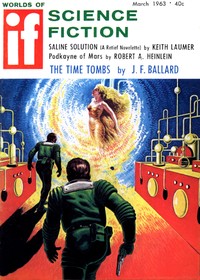
The catalog record for Countdown — Edition Insights provides practical reading context through 3,818 words, 17 min estimated reading time, and 1 detected text section.
The text analysis averages about 21.6 words per sentence, while the detected sections provide another way to judge how the source is divided.
Project Gutenberg metadata also associates the work with “Science fiction,” connecting these edition facts with the source record’s subject description.
Explore this collection
These alternatives are selected using recorded categories and estimated reading time.
About 19 minutes
Machines Invention
4,255 recorded words. 2 minutes difference from this book's estimate.
View Gutenberg source #61332About 20 minutes
Machines Invention
4,579 recorded words. 3 minutes difference from this book's estimate.
View Gutenberg source #61217About 28 minutes
Machines Invention
6,234 recorded words. 11 minutes difference from this book's estimate.
View Gutenberg source #63676Search stored excerpts and compare books → Choose by your preferences →
Choices use stored catalog measurements. Estimates vary with reading speed. A shared category is a catalog label, not a claim that two books have the same argument or literary quality.
Search reads excerpt text stored with this catalog and links to its associated Gutenberg record. The connection is stored in the site database; this tool does not recheck that every excerpt is word-for-word identical to that external record. Excerpt search does not cover every chapter and does not verify historical publication dates.
Catalog snapshot checked: 2026-09-26. Coverage: 90 public books, 90 available source excerpts.
Calculated from edition completeness, EPUB availability, text structure and catalogue metadata. Not a user rating.
Total of 100 points, scaled to a 2.5-5.0 range. Editions with an empty description or a missing EPUB file are not scored.
Public-domain source text
The source text is kept in the dedicated reader, separate from this catalogue record and its commentary.
Julian F. Grow's "Countdown" begins not with characters or setting but with a descending numerical sequence—10, 9, 8, down to 1—each digit introducing a thematic element of Cold War dread. The opening lines describe "10 years of uneasy peace, since the Hour of Tragedy," immediately establishing a world shaped by a past catastrophe. The countdown itself becomes a structural device, mirroring the ticking clock of nuclear annihilation. Each number expands the scope: from planets to geological eras, seas, continents, and finally to "5 nations remaining" and "3 men" buried in defense networks. This poetic, almost incantatory style sets an ominous rhythm, inviting readers to experience the story as a relentless progression toward an unknown but inevitable climax.
The story's title is literal: the text is organized around a countdown from ten to one. Each number receives its own paragraph, blending scientific and historical allusions with apocalyptic imagery. For example, "8 periods, in the gibberish of the sifters of chaos" references geological time from Pre-Cambrian to Triassic, while "7 seas" evokes both the origin of life and a "strangling wall" of division. This structure forces readers to move sequentially, each step tightening the tension. The countdown is not merely decorative; it governs the pacing and thematic weight, making the story feel like a fuse burning down.
Grow sketches a geopolitical landscape of "5 nations remaining"—Pan-American, Sino-Russian, Afro-Arabian—born from "a thousand wars" and "a billion dead." These are not developed cultures but abstract blocs, defined by their "terrible truce of the fusion bomb." The story emphasizes technology: "4 farflung networks" of detection and retaliation, with missiles hidden "in deserts, on mountaintops, hidden deep and in the surrounding seas." The language is clinical, emphasizing systems over people. The "Hour of Tragedy" that turned Britain into "slag" is referenced but not explained, leaving readers to infer a prior nuclear exchange that has shaped this precarious balance.
At the count's end are "3 men, of one species but riven somehow at this point in time by pigment, tongue and details of dress." They are from Brownsville, Vladivostok, and Khartoum—each "buried deep in the hearts of the networks, each already entombed." These men are the "nock of the arrow, the final factor," yet their networks target each other, creating a triadic standoff. The story withholds their names, thoughts, or actions, presenting them as interchangeable cogs. This anonymity underscores the dehumanizing logic of mutually assured destruction. Readers must watch how these figures—if they appear again—navigate their role as living triggers.
Grow's prose relies on anaphora and parallel structure: each countdown entry begins with a number and a noun, followed by a colon and elaboration. For instance, "6 masses of land, cradles for the genesis of a myriad species ... and one of them Man." The repetition creates a litany, lending the text a ritualistic, almost biblical quality. Historical depth is compressed into phrases like "the threads of history gathered finally into five flags" and "the first beast to kill from anger." This technique suggests that the current crisis is the culmination of eons of evolution and conflict. The story does not explain how the countdown will end; it simply presents the accumulating weight of time and choice.
Because the excerpts only cover the opening countdown and later boilerplate, readers should pay close attention to how the story transitions from this abstract, poetic prologue to concrete narrative. The three men named by city may become central, or the countdown may continue as a structural motif. The story's brevity (under 4,000 words) suggests a tight focus on the moment of decision. Approach the text as a thought experiment in Cold War logic, where each number represents a layer of inevitability—and where the final digit may bring either choice or catastrophe.
That rainy afternoon, Countdown — Edition Insights left me staring at the ceiling, the weight of ten ticking layers still pressing on my chest. The dread was so vast it felt almost abstract, yet strangely intimate. Later, I drifted to something lighter, a memory of reading Monster of the Asteroid — Text and Context as a kid, where the peril was smaller, more personal, and oddly comforting by comparison.
Use these questions to collect your thoughts before moving on.